Media Center
2015-09-23
National Oil and Gas Authority (NOGA) issued the annual report of the labor force and Bahrainisation ratios and training programmes in oil companies under the NOGA umbrella carried out until the end of December 2014, which was prepared by the Strategies and Planning Affairs. The report dealt with data on the labour force in the oil and gas sector as well as data about trainees in the local oil companies, and approved training budgets.
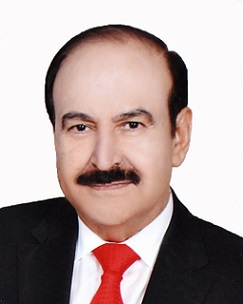
Minister of Energy His Excellency Dr. Abdul Hussain bin Ali Mirza expressed his delight over the continuous development witnessed by the oil and gas sector in the Kingdom of Bahrain in human capital, which was the key to the success of the institutions and worked towards raising the Bahraini ratios in various affiliated national companies under the NOGA umbrella The ratios are considered the highest as compared to the other economic sectors in Bahrain and in other GCC countries. He expressed his pleasure on the importance of the human element which, he said, was the mainstay of the production process and promotion of substitutable development helped advance role of nationals in the hierarchy of the oil and gas sector organizations and make room for Bahraini employees of both sexes to assume leadership centers in all the major oil companies. He expressed happiness and appreciation to all officials and employees in the oil sector companies for achieving such impressive results since the issuance of the Royal Decree No. (63) in the 2005 establishment of NOGA, wishing happiness and uninterrupted job policy that would have a great impact in raising the productivity of staff members.
This report showed details of the Bahrainisation rates in the NOGA oil companies, where some had reached 99.04%, which is considered the highest-level in economic sectors in the Kingdom and across the GCC.
The number of employees working in the oil sector reached 4,302, of whom 3,422 are Bahrainis. The total workforce in Bahrain Petroleum Company (Bapco) was 2,388 workers including 1,865 Bahrainis, giving an estimated Bahrainisation ratio of 78.1% until the end of December 2014. The Gulf Petrochemical Industries Company (GPIC) continued during 2014 to promote Bahraini cadres to senior leadership positions in the company. While the total number of employees stood at 531, including 443 Bahraini workers, reaching a Bahrainisation rate until the end the month of December 2014 of approximately 83.4%. The report stated that the Bahrain National Gas Company (Banagas) achieved high Bahrainisation rates in terms of employee numbers, the total number being 492 workers including 442 Bahrainis, making the Bahrainisation ratio 90%, indicating a high percentage in human resources in Banagas and Banagas Expansion, a company wholly owned by the Kingdom of Bahrain.
The Bahrainisation ratio in Bahrain Aviation Fuel Company (Bafco) was high when compared with other oil companies. The company continued to maintain a ratio of 99.04%, with out of the total 104 workers, 103 being Bahrainis. The number of Tatweer Petroleum employees stood at a steady 787 workers, including 569 Bahrainis, denoting a 72.3% Bahrainisation, the company being a joint venture between nogaholding company, Occidental and Mubadala (UAE), where nogaholding owns 51% of the company stocks as was established based on Law No. (24), which provides for the development and production sharing agreement to develop Bahrain Field.
The report noted that NOGA oil companies adopted advanced strategies in human resources training on a regular basis and the latest practical and scientific means to effectively contribute to the increase of knowledge and the promotion of productive capacity of the staff and all the employees of these companies. The oil companies spent huge sums of money for this purpose, nearly BD 10.197 million, with an average share of 2,370 BD per trainee.
The NOGA companies seek to encourage the Bahraini cadres to perseverance and hard work in developing their practical abilities, scientific knowledge and skills in order to contribute to raising productivity and achieve the strategic objectives of the oil companies and through the adoption and the allocation of large budgets for vocational training and scientific, which coincided with the keen interest and wise political leadership Bahraini human beings and the development of scientific and practical skills and abilities, and direct investment in the development of future leaders and make Bahrain a leader in sustainable human development at the global level.